To Roll or Not to Roll....that is the question?

There has been much written recently about the virtues of foam rolling. Is it really all that good for you, and why? Or maybe it's not all it's cracked up to be?

It can all be a bit confusing depending on what you read, and I have a had a lot of feedback about just that. I'll try to cut through the technical jargon and cut to the chase. 
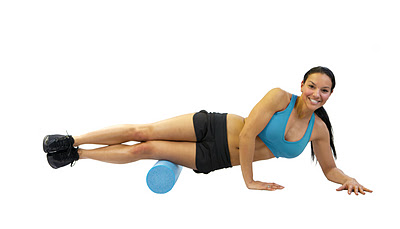
 

Foam roller for ITB

Foam roller for ITB

Every runner seems to be using a foam roller as part of their recovery these days, and it is considered along with the spikey massage ball an essential part of a runner's kit.

I believe this is for good reason too, but more about my thoughts later. Let's look at some recent articles to see what's out there. 

Too much rolling on the ITB? This article's headline, " Your IT Band is Not the Enemy, (But maybe your foam roller is?)"

I received a lot of queries after this one, as to whether we should be rolling out our ITB any more. A closer look at the article tells us not that, but that underlying many ITB issues is a glut medius (GM) weakness that also should be addressed.

Your ITB can be placed under excessive stress as a result of glute medius weakness, that results in destabilising the pelvis & hips during the stance phase of the gait cycle. Basically if your GM is weak, your hips & pelvis may not remain level as you push off the ground with your opposite leg ( propulsion).

Running form, and hip/pelvis stability. Are they level?

Running form, and hip/pelvis stability. Are they level?

Furthermore, if your glutes aren't activated early in this phase of the gait cycle, more load and strain will be placed on the ITB, and quads potentially leading to overload and strain, then injury. This article provides some valuable information about testing & strengthening your GM. But don't forget to incorporate this activation into the early downward phase of your gait cycle - as the foot comes down into the stance phase. Strong glue activation leads the propulsion phase, thus taking the load away from the quads, ITB and hence knee! (Apologies for getting technical)

Technique is everything to the runner!


The next article is a very good Review of Literature on Foam Rolling.

In summary, and to keep it very simple; These studies have shown that foam rolling may;

1. Decrease exercise related muscle fatigue,

2. Improved vertical jump height and maximal force production (power),

3. Improves range of motion ( particularly across the knee), 

4. Reduces muscle soreness & fatigue

All in all, there is evidence to strongly suggest that foam rolling aids in exercise recovery & (thus) helps prevent injury.

For those runners like myself, most of us would agree to this and foam rolling remains a critical part of our regular recovery routine.

Why & How?

Muscles get tight & sore after heavy exercise, as part of the effects of overload in training, which results in positive physiologic adaptations such as strength & conditioning. 

Recovery however occurs when we are not training, and between sessions. What we do during this time determines how well recovered we are for our next training session and so on. If we are not well recovered, and continue training, invariably and inevitably tissue breakdown occurs, leading to injury.

Sadly, many runners spend much of their recovery time sitting, usually at work through the day, and then at home in the couch during the evening. This results in our muscles and their protective fascia becoming shortened & thickened, thus creating stiffness & soreness. If this is not addressed, the cumulative effect can lead to build up of tension, loss of elasticity in the muscle, reduced blood flow & muscle function and then injury.

Using your foam roller regularly can effectively address this as we have seen, and hence assist recovery, and help prevent injury.

The key is to roll regularly, particularly at the end of the day after much sitting to assist recovery overnight. You can roll before exercise and/or after.

Tip: keep your foam roller in front of the couch to remind you not to sit in the couch, but to get on the floor & roll instead!

Your goal with rolling, is basically to seek out & roll out the tight & sore bits (hard, inflexible knots), until they change into softer, springy & elastic tissue. This usually only takes between 30-90 seconds on each tight bit. Then stretch out the muscle for 20 seconds or so, then move on to another tight bit, and so on. You will soon learn where your tight or problem bits are and with regular practise how to manage them.

You don't need to do it too much, or for too long, just regularly.  

Good runners are strong and springy! This is what will help you to Run Well; strong, elastic tissues ( muscle & fascia).

Keep rolling, and once again, as always Run Well!

It's Not About the Shoes, or is it? Part 2: Which shoe is best?

A couple of weeks ago I wrote a blog about how we do run differently in different shoes, in particular minimalist shoes resulting in reduced stride length and increased stride rate. This article has prompted many to ask the following questions;

How many pairs of running shoes do I need?  

If my personal running shoe collection is anything to go by then the answer is too many for my wife to read, so I will just say that I regularly wear about 8 different pairs. I have runners for sprint and speedwork on the track, shoes that I wear specifically for foot strengthening, a couple for shorter race distances ( 5k to half marathon), others for longer races (marathon), then others for slow long runs, and trail runs, & cross training.

These shoes range from very flat, and light; ranging from zero drop, to 2mm, 4mm, 6, 8 up to 10mm drop; and they range in stiffness from ultraflexible to stiff & responsive. Importantly, they all serve a different purpose.

My current shoe collection, not including the ones that love at work. Not an Asics in sight!

My current shoe collection, not including the ones that love at work. Not an Asics in sight!

And the next question invariably is;

 " Which running shoe is best for me to get next".

There is no simple answer of course. Running shoes are designed for different types of people, strides, feet and importantly types of running. What may be the ideal shoe for you, may not suit someone else. What is important is to understand what a particular shoe is designed for, and whether that suits your ability and needs. 

Runners, like running shoes are all different and diverse, and as a runner's fitness and running characteristics change, your shoes can and should change as well. Depending on what we are training for, we often perform different types of runs, so it is reasonable to suggest we need different types of runners for different types of running. 

Furthermore, running in different shoes can make you stronger, hence faster and ultimately less prone to injury. Studies show correlations between running in a variety of footwear and reduced injuries. Essentially, when you wear a different pair of shoes your interaction with the ground changes slightly, thus your stride alters as does the loading and impact forces taken by your feet, legs and body. This helps to vary this impact loading, thus stimulating & strengthening other muscles and connective tissues whilst reducing repetitive stress on the same body parts. 

You should have a different pair of shoes for different running types. A sprinters running shoe for on the track is completely different to the running shoe that marathoners wear. hence, your running shoes should differ for speed & track work, for tempo running, shorter racing, and longer distance running.

So, what's the difference?

The flatter and closer to the ground the shoes, the quicker you will react to the ground, potentially helping you to run faster. At the same time, these shoes will serve as a strengthening tool as your feet will be reacting quicker & working harder in response to the ground. As these shoes typically are flatter ( low heel height to forefoot height or heel-toe drop), this will also place additional load through your plantar fascia, foot muscles, Achilles and calf muscles. These muscles are the very important spring that propels us when we run, and to strengthen this area will benefit your running. These types of shoes are commonly known as minimalist shoes, have a thinner sole, and lower heel-toe drop (less than 5mm) and are suited to faster running training, as in Interval running, track workouts, and racing.

In contrast your marathon shoe is suited for longer distances, and slower runs might have more cushioning, hence a higher heel height, and heel-toe drop. This will serve to slow the rate of impact forces which over the longer duration & distance helps to reduce repetitive stress through the foot and lower leg structures.

This information has often been tricky to find, and for many years I have used a popular running shoe site, runningwarehouse.com to determine this information before advising on a particular shoe recommendation. However, I'm very grateful to Pete Larson from Run Blogger who has recently compiled a complete list (from the same reference site) of shoes that he calls the Tool- Shoe Finder that can be easily accessed here.

This tool can provide you with the critical information to make an informed decision on what shoe to try next. Information such as shoe weight, heel ( stack) height, forefoot height and hence drop ( heel height - forefoot height), and level of stability within the shoe are all listed.

My only advice is do not change the type of shoe too drastically in one go, better to gradually work your way down to a more minimalist variety over time. This allows your body to gradually adapt to the changed conditions as you wear the new shoes more often and for longer runs or run sessions, and after 6 months or so, provided you have no injury concerns, you can drop down again.

If you are looking for specific advice on shoe selection, I am only too happy to help. You can contact me here.


Hill Workouts, what are they all about?

Good runners are strong runners are fast runners.

If you want to get stronger, and faster, do hill repeats. Simple.

Run hills for strength & speed

Run hills for strength & speed

Hill running has been a feature of world champion runners for decades, and the likes of Arthur Lydiard, Herb Elliot, Sebastion Coe and the like are proof of the pudding as to the effectiveness of hill running for developing strength, and speed.

To get the most out of your hill training session, here's a few important tips to follow.

Firstly, why is hill running effective?

In the same way as athletes lift heavier weights to build strength, hills offer greater resistance hence greater force requirements to run. While track running is great for developing leg speed and pace, it's hills that force us to generate maximum force. As such, you get stronger at running. Not only that, but running hills forces us to pick our feet up and drive our knees forward, keeps our feet under our hips, and encourages glue drive - all vital ingredients to good running form!

In addition to this, we can target all three types of muscles fibres at the same time - fast twitch that are powerful but fatigue quickly, intermediate and slow twitch that are less powerful but more fatigue resistant as these work aerobically benefiting endurance athletes. As a result of this effect, hill training is great for sprinters and endurance athletes alike.

As we run hills we recruit these fibres in order; slow twitch first, add intermediate ad fast twitch when our force requirement if greatest. With this in mind, we can design our hills session to the recommended duration and intensity to target the most relevant fibre types.

love the hill run!

love the hill run!

What session is best for our Endurance ( marathon ) athletes?

Long Hill Runs:

​The long run is the most important element in the marathoners training program. This is because we need lower intensity, longer duration workouts to build the necessary endurance capabilities of our muscles, thus targeting our slow-twitch fibres.

Adding long hills to your training will help to increase the development and recruitment of all of your slow-twitch fibres, as well as intermediate fibres as things get tougher the longer the hill, and harder you push.

Try to find a hill that is long, gradual and moderately steep that takes between 4-6 minutes to complete. You can repeat this as a circuit 2-3 times or more as you get stronger and fitter. Ensure you have adequate recovery between hill repeats so that you are running well, and don't get too fatigued. Longer hills should be strong and steady, with good form and within your aerobic threshold.

Alternately, if long hills are a bit hard to find ( inner Melbourne ) you can find a shorter hill, say 400m as per Anderson Street, at the Tan is ideal. You can push this a bit harder but still stay comfortably hard, and repeat 4-8 times as you progress.

Look for hills that take 30 seconds, 60 seconds, 90 seconds and perform repeats with as much as 2-4 minutes recovery between sets. You'll be working up toward your lactate threshold a bit more with these, so again plenty of recovery to maintain good form and quality of your running.

Finally, very few weeks try to incorporate an undulating hilly run as your Long Run, or maybe a trail run for a similar effect.

Hills runs work. Do these every 2-3 weeks, not too often and you'll feel the benefits soon enough.

Train Smart. Run Well. Race Better.


It's Not About the Shoes, or is it?!

Recently, I came across another article about running form changes wearing different running shoes. Essentailly this compares the foot strike pattern between a runner or runners wearing barefoot, minimalist and standard running shoes.

This particular article is written by well known and respected runner & author, Pete Larson on his very popular Run Blogger website. This site is a valuable resource with alot of very good information for runners. For those readers who continue to find this information confusing, this article is a very good summary of what I believe are accurate findings.

Footsrike among different shoe types


In essence he summarises the research data well in that;

1. Barefoot running is different and no shoe perfectly replicates the barefoot condition. Running barefoot, particularly on a hard surface, increases the likelihood that a runner will adapt a midfoot or forefoot strike. Running barefoot will also generally result in an increased stride rate and decreased stride length.

2. Running in a shoe with no cushioning will simulate some aspects of barefoot running, but will not necessarily simulate the barefoot condition perfectly.

3. Running in a “minimal” shoe with a moderate amount of cushioning is unlikely to alter form very much, particularly foot strike. In other words, if cushioning is present, a heel striking runner is unlikely to move to a midfoot or forefoot strike.

The results of this study suggest a gradation of effect of running footwear on form. None of the shoes mimicked the barefoot condition perfectly, even the minimal shoe with no cushion. When barefoot, the runners had the smallest amount of ankle dorsiflexion, a higher cadence, and a shorter stride. The zero cushion shoe yielded similar results to barefoot for foot strike, and had intermediate values for ankle angle. Stride rate decreased incrementally from the zero cushion shoe to the standard shoe, and step length increased incrementally from the zero cushion to the standard shoe.

What does this mean to you, the runner who might be looking to change their running shoes, or your style?

This data suggesst that a change to a minimalist shoe type, provided it has little cushioning can change your foot striking pattern and hence change your stride rate and length. I believe these factors are important in reducing your impact load and improving your running efficiency. Running efficiency nasically means getting on and off the ground quickly (ground contact time) which will also help your running economy ( the amoujt of energy you spend doing it), as well as reduce the risk of injury from mechanical overload.

And so this is why I say, "it's not all about the shoes." What I mean by that, is that if you put a runner with poor running form into a pair of minimalist of barefoot shoes, they will still be a poor runner. Whilst it might alter their gait somewhat, this doesn't make them a better runner without the proper training and understanding to assist in the process of changing running tecnique.

Running technique is a skill. This skill can be taught, learned and must be practised to become a better runner. Better runners are strong, efficient and economical. All of these traits are learned and practised and importantly take time to develop. This should be the focus of the runner who is looking to alter their running form., and must be considered by the runner looking to dramatically change their running shoes.

If you want to change your running shoes to a more minimalist variant, you must consider that this process requires time to adapt & strengthen your legs and feet, at the same time as working on developing different motor patterns to facilitate the process of changing your running form.

Science has shown that people do typically run differently in minimal shoes, they are not the same as running barefoot, and injury rates among those transitioning into minimal shoes aren’t any differentthan those who continue to use a traditionally cushioned running shoe (though the types/location of injuries likely differ).

Importantly, this process must be approached slowly and gradually to allow the appropriate neuromotor changes and muscle conditioning to occur, thus reducing your risk of acquiring injury.

As always Run Well.

Coming soon, "what shoe to choose next?"


Run A Marathon, change your life!

Running a marathon is an experience that is difficult to put into words. For many it represents a significant experience in their lives, one that they will never forget, as it changes them.

rob de castella marathon

As we approach and enter another Melbourne Marathon campaign, I'd like to share some of my favourite quotes about marathon running that help to describe the physical and mental challenges of the most famous 26.2 mile (42.195km) race. These will inspire, motivate, or maybe frighten you a little.

If you're up for the challenge, now is the time to commit. But be warned, it may just change your life!

“Of all the races there is no better stage for heroism than a marathon”.
— George Sheehan, running author
The marathon is a charismatic event. It has everything. It has drama. It has competition. It has camaraderie. It has heroism. Every jogger can’t dream of being an Olympic champion, but he can dream of finishing a marathon.
— Fred Lebow, New York City Marathon co-founder
“We are different, in essence, from other men. If you want to win something, run 100 meters. If you want to experience something, run a marathon.”
— Emil Zatopek, Czech runner, Olympic champion.
“The marathon can humble you.”
— Bill Rodgers, 8 x Marathon champion.
“If you feel bad at 10 miles, you’re in trouble. if you feel bad you’re normal. if you don’t feel bad at 26 miles, you’re abnormal.”
— Rob de Castella, winner 1983 World Marathon Championships.
“Pain is inevitable, suffering is optional”
— Haruki Murakami
“Anyone can run 20 miles. It’s the next 6 that count”
— Barry Magee, Olympic marathoner, author.
“I’ve learned that finishing a marathon is more than just an athletic achievement. it’s a state of mind; a state of mind that anything is possible.”
— John Hanc, running writer

I could keep going, but better stop there. This stuff gives me tingles, butterflies as most who have gone through the same experience can attest.

It is often said that the hardest part of the marathon is getting through the training, getting to the start line. I couldn't agree more with that statement. That doesn't mean go easy in your training, quite the opposite. That means your training program and how you complete it is vital to your success. This is where many get it wrong, resulting in becoming a non finisher or even worse a non starter. It is very important you get this right from the start.

The objective of a good personalised program is;

1.    Get you to the start line in one piece. This means well prepared, with a race plan, and injury free.

2.    Allow you to the finish the race feeling strong, elated, and more than a bit tired!

3.    Meet your realistic goal race time or perhaps better it.

At Run Well, we can help you to have a successful marathon experience, whether it's your first time , or you are training for a personal best.

Enquire here for your free program assessment, or to ask how we can help you.


Garmin 620 & cadence

Another beautiful day for a Sunday run, 20 degrees, sunny, the beach was packed with people out and about; A great afternoon for a run. Whilst still in pre-training before the official program starts, I set out for a 14 km run, with a 5 km tempo section after the half way point.

I hadn't done any extended Tempo work for a few weeks, so thought it would be good to test the motor out a bit, and at the same time test out my new watch. I had just received my new Garmin Forerunner 620 last week and this was the first run with it. I'd only set it up with my essential details and thought I'd just see how it went. I'd had the 610 until recently when the battery died on me again, and thankfully Garmin had decided that being the third time it had broken down to offer me the upgrade, which I quickly accepted for the same repair cost.

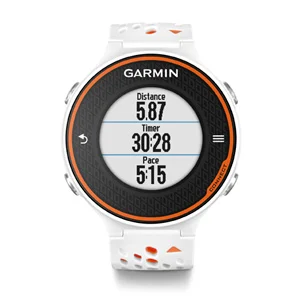
The Garmin Forerunner 620

The Garmin Forerunner 620

I was aware that this watch had a few new features besides the standard time, distance, pace and heart rate such as VO2 max estimate, cadence, ground contact time but hadn't really read up on how to use or access these and thought I'd do this later that night.

Once I finished my Tempo section of the run with a further couple of kms cool down, finishing at St. Kilda Beach, and being such a warm, sunny afternoon I was keen to cool off my legs in the water as I often do. 

It was whilst I was out there that I was pleasantly surprised when I started to scroll through the data on my watch. It was preset to record every km split, so i had a very accurate reading of my performance at each km, and most interestingly during my tempo section. I could see this as it beeped after each km, so I knew what my pace had been and hence whether to adjust it to reach my peak tempo goal pace. So this feature itself is very handy for these types of runs, or any runs at pace, which of course most training runs are.

garmin 620 cadence

garmin 620 cadence

But, the other feature I found very helpful and was not expecting was the cadence reading I found when looking at my Interval splits. Firstly, noting that my cadence increased with each faster interval as I would expect but actually having a reading to compare. Whilst I had done this roughly by counting steps for 30 seconds whilst running in the past and then doubling the number to give me a good idea, it was great to see it for real.

So what did this mean to me? Well it showed me that I need to work on increasing my cadence with my faster running intervals and this will become a focal point with future Tempo and faster Interval runs. I will then have an accurate reading to track my progress.

Whilst we know that cadence increases with pace, and we all have an optimal or most economic cadence:pace relationship, many runners may not realise that this is a skill to be practised. To focus on your cadence and working to increase your cadence by 5% is a very effective exercise during easy running and put into effective practise during faster runs. Training your legs to move quicker through the gait cycle will help you to run faster. However, be sure to maintain good running form, with smooth application of technique as you go. Think smooth, light & easy... then fast.

Thus scrolling through your watch retrieving info is also a very good distraction when you're braving the cold bay waters after your Long Runs in the midst of Winter, and gives you valuable information that you can use as focal points for future runs.


Hundred Up

This week's weather will have tested many a runner's resolve and commitment to get out and run. Whilst my favourite saying in this case is; " There's no such thing as bad weather, just inappropriate clothing ! ", there are many reasons why you may not be able to get out for a run when you'd like, be it the weather, work or family commitments.

This week I thought i would offer a good alternative exercise to replace your run that will simulate running, and as such build strength and good form to complement your running.

There's no such thing as bad weather, only inappropriate clothing!

There's no such thing as bad weather, only inappropriate clothing!

Known as the "100- UP" it's a very old exercise that was invented by a champion miler from the late 19th Century, known as George who couldn't always get out for his run when he liked, and so developed this exercise which helped improve his running form and maintain some running fitness.

There are two levels that George called the Minor and the Major which represent two progressions of the exercise. It's most important to note that the focus must be on good form or technique. I will use George's own poetic words to describe his exercise:
 

First of all let me impress upon the student the necessity of maintaining perfect form in every practice, be it in the preliminary or the exercise proper. Directly the correct form is lost the work should stop. Beginners should start the exercise slowly and on no account strain or over-exert themselves. Hurried or injudicious training, or fast work while the system is unprepared for it, induces breakdown and failure. On the other hand, slow, well considered, steady practice is never injurious, while breakdowns are practically unknown among those who start their training slowly and who gradually increase distance, time or pace as the heart, lungs and muscular system throughout grow accustom to the extra strain and revel in it.

I have divided the ’100-Up’ Exercise into two grades — the Minor and the Major. The Minor is for all classes when learning and is the limit for those who are physically incapable, through age or through infirmity, of participating in the more strenuous or trying major form of the exercise.
 

The Minor Exercise

Draw two parallel lines along the ground, 18 inches long and 8 inches apart.

Place one foot on the middle of each line. Stand flat-footed, the feet lying perfectly straight on the lines. The arms should be held naturally, loosely, and, except for a slight forward inclination, nearly straight.

Now raise one knee to the height of the hip, and bring the foot back and down again to its original position, touching the line lightly with the ball of the foot and repeat with the other leg. Continue raising and lowering the legs alternately. The main thing to remember is correct action. See that the knees are brought up at each stride to the level of the hip if possible, or as near as possible to the point as can be managed by the too-fat or bodily infirm individual, and that the body maintains its correct perpendicular.
Correct form once attained, the exercise may be increased in severity by gradually working from 10 to 20, 30 to 40, and so on to the ’100-Up’ at each session, and by speeding up the pace.

The Major Exercise

This exercise is more difficult of accomplishment, yet comes easily to the student who by reason of having attained correct form in the preceding preparation will have, at the same time, acquired strength and the art of properly balancing the body when in action.

Stand on the lines marked out on the ground as before, except that the body must be balanced on the ball of the foot, the heel clear of the ground, the head and the body being tilted very slightly forward, and the hands down by the side.

Now spring from the toe, bringing the knee to the level of the hip or as near to that point as physique will permit, as in the minor exercise, letting the foot fall back to its original position. Repeat with the other leg and continue raising and lowering the legs alternately. This action is exactly that of running, except that instead of the legs moving forward as each stride or leg action is performed, the foot drops back into its original position on the ground.

The knees must be brought to the level of the hips (for full benefit) as each stride is taken, and on returning the foot to the ground, care should be taken that it is not carried further behind than the original position. Thus the body is practically kept upright except for the very slight tilt forward.

While performing the ’100-Up’ Major Exercise use the arms as they should be used in the correct way for running, i.e. hold them at full length and swing them forward half across the body and backwards a few inches behind the back as each stride is taken.

I do not advise anyone to attempt more than 20-Up of the Exercise at the start, ten for each leg. Very few can manage so many in correct form at the outset, but regular practise brings greater stamina and an easy action which renders the task less arduous, and once the 20-Up has been accurately accomplished, the number may be steadily increased.

The student must not expect to get true action in a moment. The first few attempts may even be disappointing, but keep steadily trying, and the correct form will come sure enough. Once having become proficent he can keep on working gradually up to the 100 and by judicious variation of pace and number, the athlete can so frame his exercise as to suit the speed and stamina required for the competition, race or branch of sport he has in view.

Now, you might just call this jogging on the spot, which essentially it is, however it is again all about your form.
With full respect to good form, this is what you need to be thinking about;
1. Tall posture, trunk activated, chest up but ribs low. Do not lean back, or bend at the waist.
2. Keeps your hips high and forward. Try to stay up off the ground, not letting your hips drop.
3. Foot and toes up! Think about lifting your foot up toward your butt, rather than lifting your knee. This makes all the difference in this exercise as in good running form! Note the foot lifts up past the opposite knee (see diagram of George) bringing the knee forward and high.
4. Perfect form for this exercise means the knee comes up to hip height. This is where the hard work & strength factor comes in to play.
5. Think about actively pushing the foot back down to meet the ground ( = early glute activation).
This action will help to keep you tall, and high as with all strong runners.

This exercise is a form of a 'drill' we commonly see track and elite athletes doing regularly and so remains an integral part of running training today. And now, it is available to you, so give it a go.

Good luck, run well, and let me know how you get on!.


The 5 biggest mistakes marathoners make! Look out for these if you want to be a strong finisher at your next Marathon?

At last year's Melbourne Marathon, nearly 1600 entrants or 20% did not finish!
Here's the 5 biggest mistakes that you need to avoid to ensure your success at your next marathon, and be a finisher!

Which marathon finisher will you be?

Which marathon finisher will you be?

An alarming statistic, but what's more surprising to people I speak to is that many of those non finishers are actually non starters. It is well known that the toughest part of the marathon is getting through the training, to get you to the start line well prepared and injury free.

As an Osteopath, with over 24 years of clinical experience, I've seen & treated many injured runners training for the marathon. And as a running coach it's important to find out how these runners have been training in order to understand why they have ended up in my clinic room. As a result of this type of study, I can share with you the top 5 reasons why many runners don't make it.

1. Fail to Plan : Many underestimate the time & commitment that is required to fully prepare your body to cover the marathon distance. The longer you have been running regularly for, the better your start position, but generally speaking you want to commit at least 6 months of regular running to prepare for the marathon. This will give you a 6-week period of easy running before your program starts, getting used to running 3-4 times per week before commencing an 18- 20 week program of slow, progressive build up of mileage, running 4-6 times per week..

2. The Right Program : An appropriate program designed for you will take into account your running ability, history, lifestyle, and importantly your running goals & needs. Your program will include the appropriate number of runs, types of runs and mileage that suits your ability & goals and to ensure you are well prepared. This means doing enough running at the right pace without doing too little or too much!

3. Paces : Many runners run their long runs too fast, and their shorter runs too slow!

When you are training for the marathon you need a goal time to train to. This sets the prescribed paces for each of your runs - Long Runs, Tempo Runs, Speed and Interval Running. These paces are specifically set to allow you to develop your running conditioning, in particular your aerobic capacity (with slow, easy long runs, within your aerobic threshold) without overtraining, and risking injury. If you don't develop your aerobic capacity well enough, you risk hitting the wall on race day! Even as a beginner marathoner, your training paces are critical to your success, for many get this wrong and end up under prepared, or risk overtraining ( by running long runs too fast) and injured, rendering them a non starter!

4. Race Plan : Fail to plan, and you plan to fail! 

It's an all too common scenario where runners get caught up in the moment, start their race too fast, and burn up too much valuable glycogen ( fuel stored in muscle, is a finite source) and end up running out later in the race, when it's needed the most.  THIS IS HITTING THE WALL, and essentially means your race is over as you struggle all the way to the finish line. However, this situation is entirely avoidable if you train smart, and plan your race. By managing your pace and intensity right from the start, and hence your energy systems to see you through to a strong finish.

5. Recovery : Your training is only as good as your recovery! 

Recovery is what gets you from one session to the next, and from week to week without breaking down. If your recovery is not effective enough, you will build up cumulative strain, develop tightness and stiffness in muscles (as niggles), which if not addressed can lead to injury as the demands of your program increase ( increased mileage & intensity). Recovery occurs when you're not running and so is affected by everything you do between runs.  Active recovery is preferable to passive recovery (rest, sitting) and is most effective in helping your body to overcome and adapt to the effects of your running sessions.

Active recovery consists of light forms of exercise at a low intensity that create stretch or change in the muscle length, promote blood flow and get your heart rate up a bit. This helps to assist in the body’s adaptation to the harder training sessions, meaning you get stronger and fitter, which again is what recovery is all about. This could include easy cycling, walking, swimming, yoga, pilates, massage!

And when niggles do inevitably develop, don't ignore them, seek an assessment, treatment and management strategy to keep you on track! Don't wait until you're injured.

At Run Well, we believe that a customised program is better when preparing for the marathon, whether it's your first marathon or you're aiming for a new personal best. Our aim is to deliver you to the start line well prepared and in good shape, to see you finish strongly, within your goal time.

Please contact us if you have any questions, or need help in preparing for your next marathon.

Don't just leave it to chance!